By David Rollason

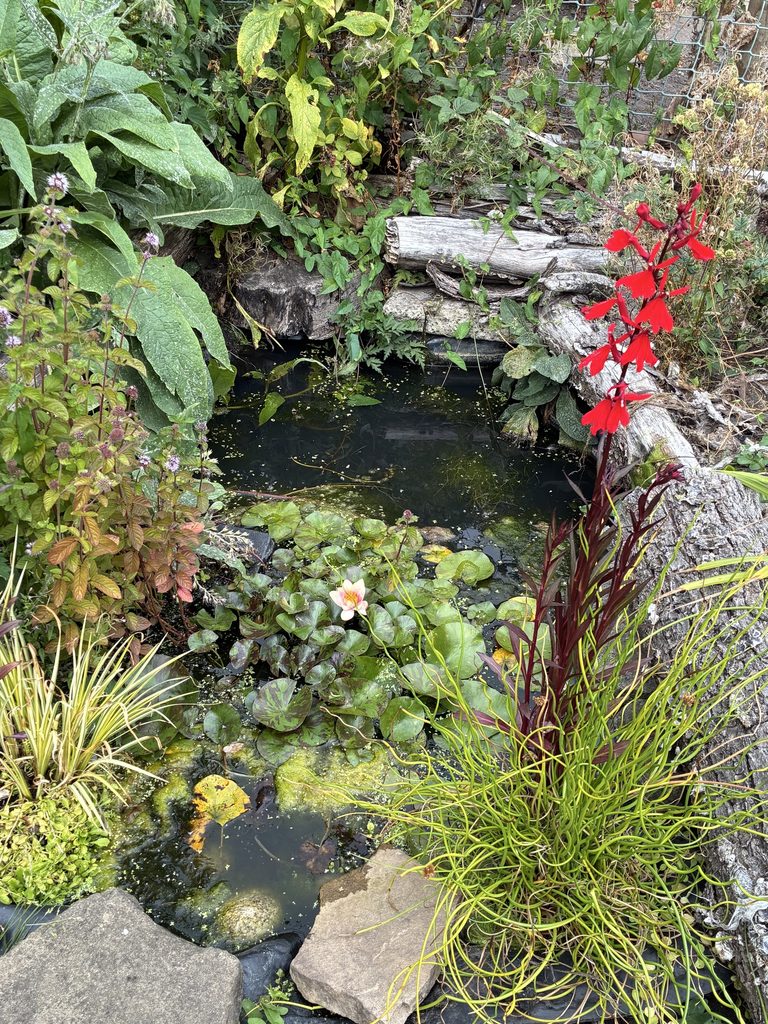
Lynda and David Rollason’s pond, plot 16.
Ponds are treasure-houses of life. Their plants and animals are mind-blowingly ancient. Fossils from a pond on the Isle of Wight are 36 million years old, and include damselflies, bulrushes, water soldier plants, and pondweeds as today. When you look into a pond, you are looking into the depths of time.
Ponds, innumerable not long ago (village ponds, ponds in fields for cattle, ponds in wetlands), are in crisis. Drainage, intensive agriculture, chemical pollution take a dreadful toll. Around 2000 ponds are destroyed every year.
Ponds are richest when they are close to each other, as on St Margaret’s Allotments. One pond can only contain a certain number of species; a group of ponds can contain far more. Species in an individual pond can become extinct through drought or mischance. Where ponds are close enough to each other, repopulation can happen – plants through seeds being carried by the wind or on the feet or in the guts of birds and mammals, animals because many, most water-beetles included, can fly.
Ponds are richest when their immediate environs are undisturbed, as in the case of our ponds. Many of their inhabitants need adjacent space to shelter in or so that the adults can emerge from pupas or nymphs.


St Margaret’s Allotments currently have twelve ponds. We should enjoy them – flowers, frogs and newts, birds drinking and bathing, minute creatures observable in a jam-jar of water. But we should also have in our minds that, in these perilous times, our ponds are crucial to biodiversity, perhaps to the preservation of life itself.


For further information, see https://freshwaterhabitats.org.uk/
Biggs, J. and P. Williams, Ponds, Pools and Puddles (Collins New Naturalist series; London, 2024).
**Thank you to Claire Grey (plot 70), Steve Lambert (plot 45b), and Dave Rippon (plot 49) for contributing photos of their beautiful ponds.