Our own Dave Rippon has been practicing no-dig gardening to great success on plot 49 since he took it on in 2019, and he has generously composed the following piece for anyone wishing to learn more. Take it away, Dave!

“It all starts with the soil” -Charles Dowding
There’s been a lot of interest in recent years in the “no-dig” approach to gardening. Perhaps the best known current disciple is Charles Dowding, whose approach is well documented in his books and countless videos. In the farming world, the term “no-till” is more commonly used, however, the approach dates back to long before either term was devised.
No-dig focusses on the soil and the micro-organisms, insect life and fungi that naturally occur in it. Plants, fungi, bacteria, earthworms, etc., have evolved as a symbiotic community, each benefitting from and contributing to the others’ success.
When we dig, we break the soil structure and damage some of the organisms in it, particularly the mycorrhizal fungi, which is crucial to plants’ ability to take up nutrients. Plants haven’t evolved to have their soil dug up and turned over on an annual basis. They do better in firm soil, where their roots can get a good hold, than in light fluffy stuff. In addition, every time we turn the soil we bring lots of annual weed seeds to the surface to germinate.

An environmental bonus comes from carbon capture. When we turn soil, it’s exposed to oxygen which releases carbon in the form of carbon dioxide. Recent weather extremes have emphasised the need to do what we can to help mitigate climate change and every little helps.
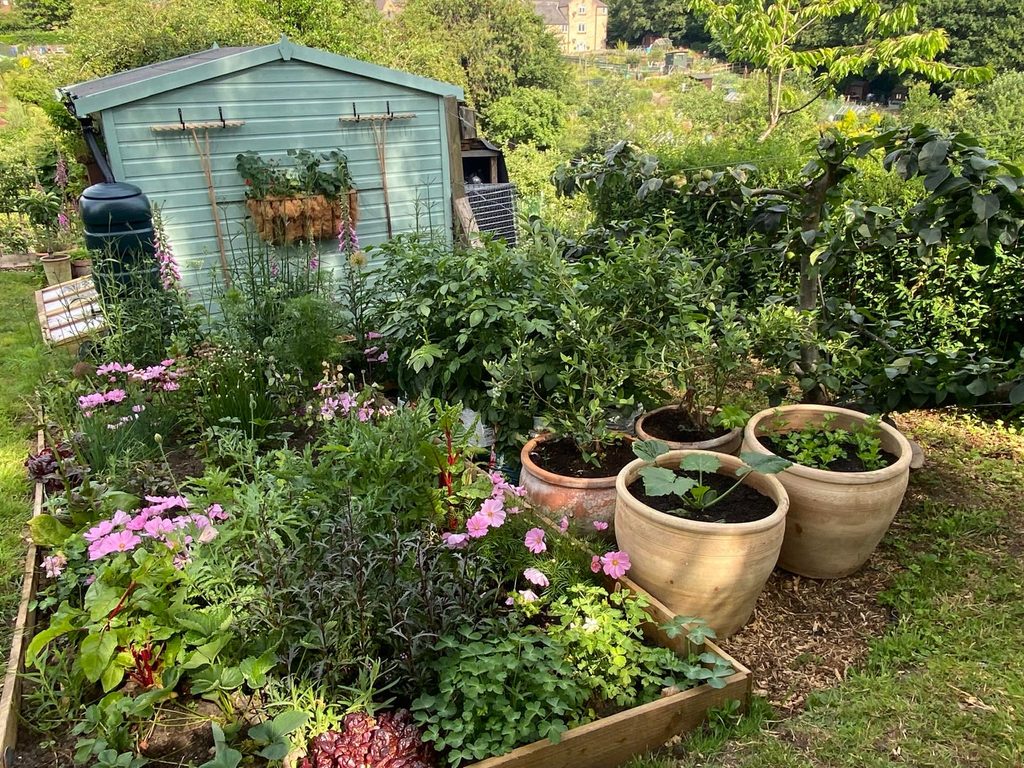
When I took on my allotment in 2019, I looked into the no-dig approach, which usually recommends covering the area with cardboard to suppress the perennial weeds and then loading a thick layer of top soil onto this. The idea of moving three or four tons of top soil, by wheelbarrow, several hundred yards through the site’s narrow and sometimes steep paths didn’t appeal to me, so I took a very anti no-dig approach to start. I dug every square inch of all the beds to a spade’s depth (or more) and picked out every bit of weed root that I could find. This meant I got none of the benefits of no-dig for the first couple of years but, over time, the soil structure has improved, the earthworms and other critters have found their way in and the mycorrhizal fungi is very visible.

In 2024, I took on the other half of the plot, which had been gardened more traditionally, though not aggressively, and I followed the same approach. In this extremely dry year, the difference is noticeable. On my original half plot, the soil a few inches beneath the surface has maintained a reasonable amount of moisture, whereas the more recent side has been much drier and, at the same time, had far more weeds. Although comparisons are difficult, my instinct is that I get better results from the established no-dig beds.

I understand that there are many other aspects of gardening that impact on success but I’m happy with an approach which works with nature and seems to require less work (not no work!), produces better results and helps the environment.
In summary:
Approach
- disturb the soil as little as possible
- cover the ground annually with a layer of manure, garden compost or other mulch
- plant or sow through the mulch layer
- hoe annual weed seedlings as they appear (should these be called “weedlings”
 )
) - tease out any perennial weeds minimising soil disturbance – if they’re deep rooted and you’ve got to dig then so be it, but still minimise disturbance
Benefits
- stronger plant growth
- greater disease resistance
- nutrients and moisture retention
- fewer weeds
- less carbon release
Negatives
- missing out on the joy of digging and weeding
- it doesn’t stop wood pigeons, rabbits or badgers

Please feel free to call at plot 49 for a chat. There are of course many gardeners out there with far more experience and expertise than me, so if you’re interested get googling. Here are a few helpful links to get you started:
- Charles Dowding: “Beginner’s Guide”
- RHS “No-dig gardening” (by the RHS advice team)
- Soil Association: “What is no-dig gardening?”
- NAS: “To dig or not to dig? That is the question”